PPF vs. Ceramic Coating: What's the Difference?
Paint protection film is a thick urethane layer that physically absorbs rock chips and impact. A ceramic coating is a microscopically thin chemical layer that resists contamination, UV, and staining while making the car easier to clean. They protect against different things, which is why many owners use film on impact zones and a coating over the entire vehicle.
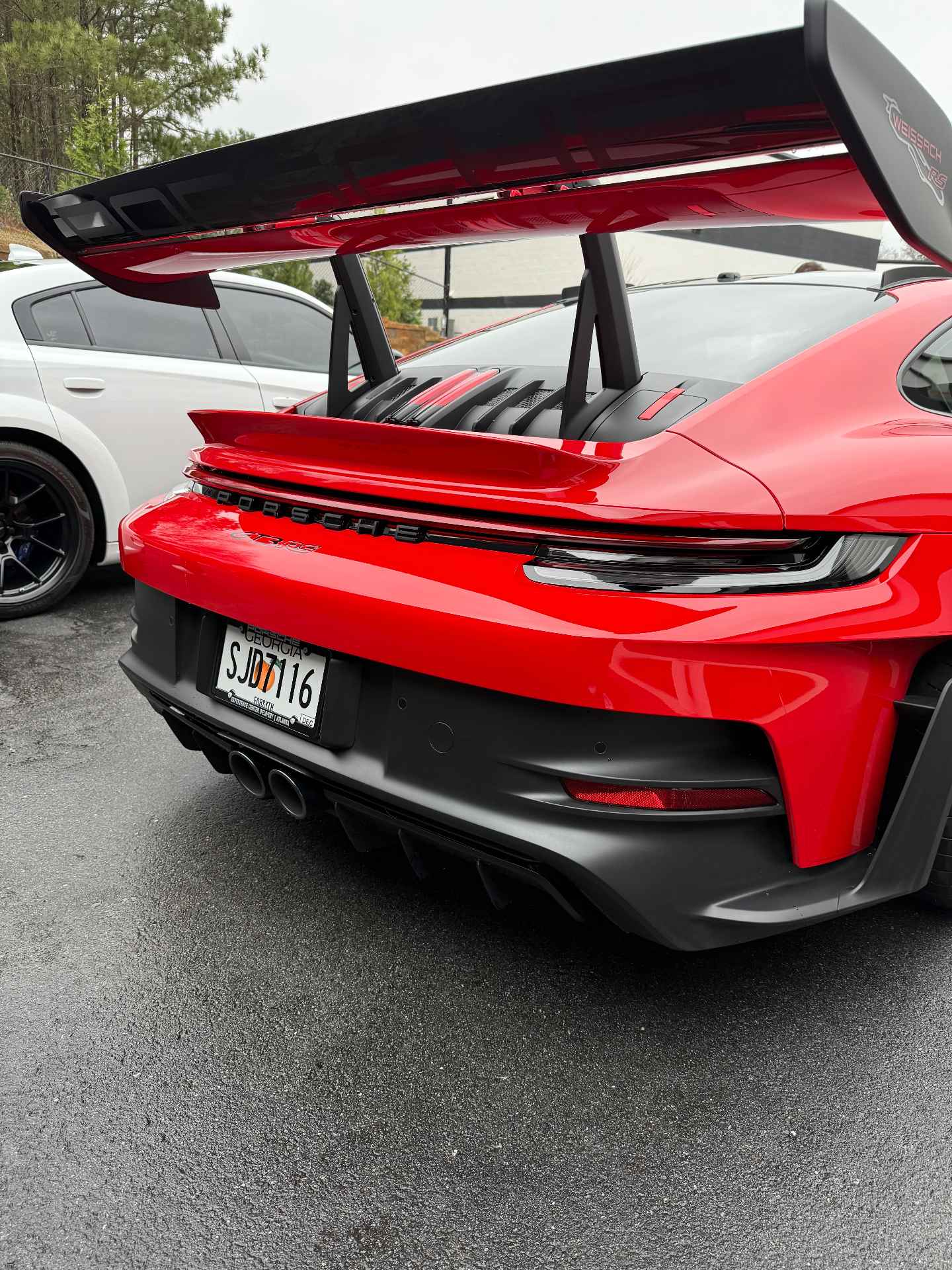
The core difference in one line
Film is physical protection. Coating is chemical protection. Film is measured in thousandths of an inch; coating is measured in microns.
| Paint protection film | Ceramic coating | |
|---|---|---|
| Rock chips | Yes — its main purpose | No |
| Light scratches | Self-healing films recover many | No |
| Chemical etching (sap, droppings) | Yes | Yes, with time limits |
| UV protection | Yes | Yes |
| Easier washing / water behavior | Moderate | Significant |
| Typical lifespan | 7–10 years | 2–5 years |
| Cost | Highest | Moderate |
| Coverage | Usually partial | Whole vehicle |
When film is the right answer
If your primary concern is the leading edge of the hood, the bumper, the mirrors, and the rocker panels — anything highway debris hits — film is the only product that meaningfully helps. GA-400 and I-85 commuters see this damage constantly.
Film is also the standard answer for exotics, where a repainted front bumper affects both value and originality.
When a coating is the right answer
If your concern is pollen, sap, water spots, fading, and the time you spend washing, a coating addresses all of it across the entire vehicle for a fraction of full film cost.
Using both together
The common configuration on well-protected cars is film on the impact zones, then a ceramic coating applied over the film and the remaining paint. This gives impact resistance where it's needed and consistent cleaning behavior and appearance across the whole car.
Order matters: correction, then film, then coating. Coating first wastes the coating under the film.
How to think about the budget
- 01Start with correction — neither product should go over defective paint.
- 02Add film to whatever impact zones your driving justifies.
- 03Coat the vehicle for chemical resistance and maintenance ease.
- 04Maintain it. Both products fail early without correct washing.
If you're deciding on coverage, our guide on partial front PPF vs full coverage walks through how driving patterns should drive that call.
Frequently Asked Questions
Can you ceramic coat over PPF?
Yes, and it's common. Use a coating formulated for film — coating chemistry designed only for clear coat can behave differently on urethane.
Does PPF turn yellow?
Modern quality films are far more UV-stable than older generations. Cheap film still yellows, which is one reason brand and installer matter.
Which should I buy first if I can only do one?
If you drive highway miles regularly, film on the front end. If the car mostly sits outside and gets washed often, the coating.
Written by 833 Auto Spa
833 Auto Spa is a concierge mobile detailing company serving luxury, exotic, collector, and daily-driven vehicles throughout Atlanta and North Georgia — including Alpharetta, Milton, Roswell, Johns Creek, Suwanee, Peachtree Corners, and Buford. Our guides are written from the work we do in client garages, not from product catalogs.
Continue Reading
Not Sure What Level of Care Your Vehicle Needs?
833 Auto Spa provides professional mobile detailing, paint correction, ceramic coatings, and ongoing vehicle care throughout North Atlanta. Tell us about your vehicle and we'll give you a straight recommendation.